
![[HERO] Hormonal Harmony: The Role of Trace Minerals in Balancing Your Body](https://cdn.marblism.com/VXwXx4uYfEZ.webp)
You've probably heard about hormones your entire life. They control your mood, energy, metabolism, sleep, and even how you handle stress. But here's something most people don't talk about: your body can't produce or regulate hormones properly without trace minerals.
That's right. Those tiny nutrients you barely think about, zinc, selenium, magnesium, iodine, are literally the building blocks your endocrine system needs to function. Without them, hormonal chaos isn't just possible. It's inevitable.
Let's break down the science and figure out how to give your body what it actually needs.
What Are Trace Minerals, Anyway?
Trace minerals are essential nutrients your body requires in small amounts. Unlike macrominerals like calcium or potassium, you only need trace minerals in tiny doses: but don't let that fool you. Their impact is massive.
These minerals act as cofactors in enzymatic reactions. Translation: they're the helpers that make your body's chemical processes actually work. Without them, enzymes can't do their jobs, and hormone production stalls.
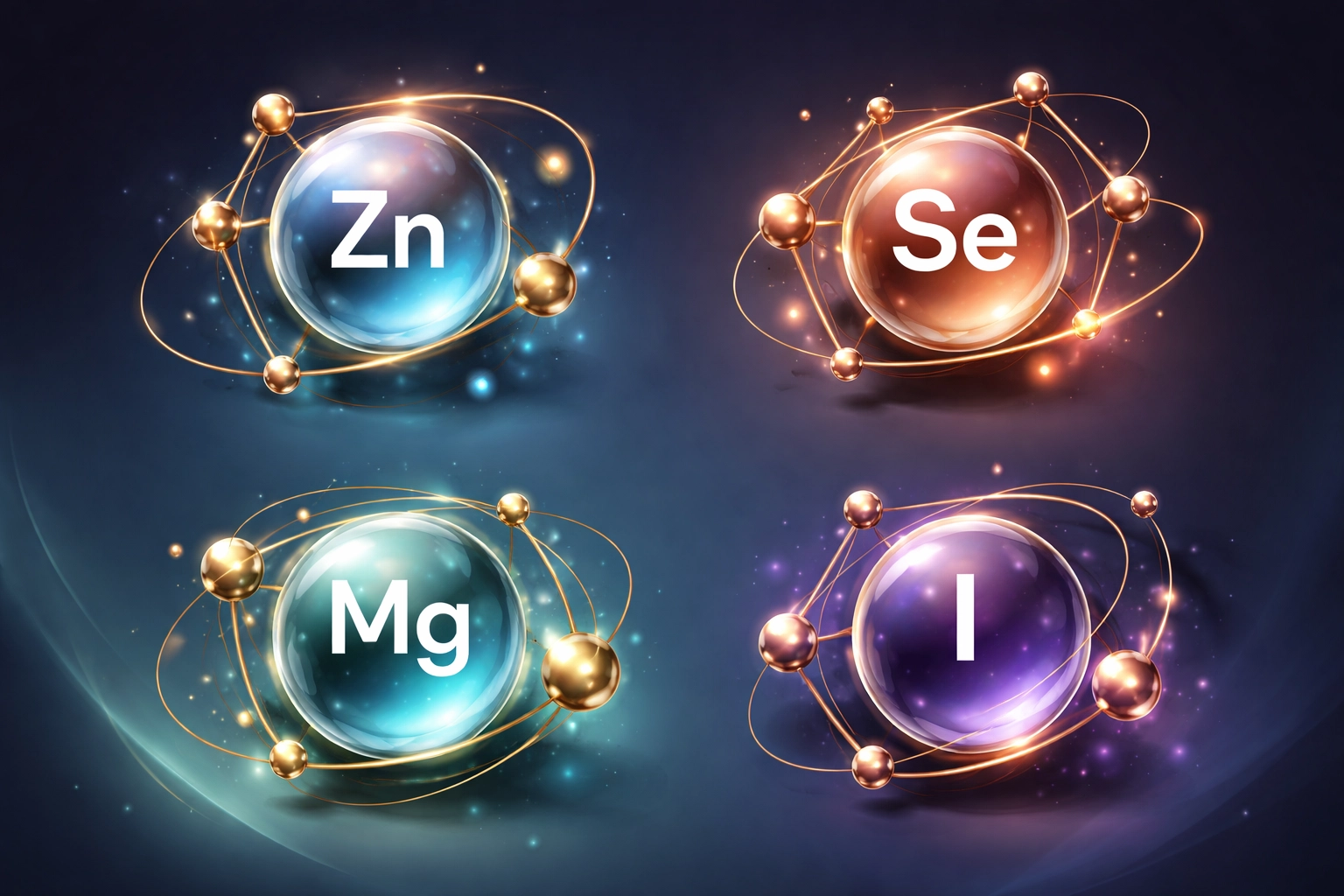
The key trace minerals for hormonal health include:
- Zinc – Critical for testosterone production and reproductive health
- Selenium – Supports thyroid function and hormone conversion
- Iodine – Essential for thyroid hormones that regulate metabolism
- Magnesium – Involved in over 300 enzymatic reactions, including hormone synthesis
- Copper – Works with zinc to maintain hormonal balance
Here's the kicker: most people are deficient in at least one of these. Modern farming practices have depleted our soils, which means even "healthy" foods often lack the mineral density they had decades ago.
The Hormone-Mineral Connection
Your endocrine system is incredibly sensitive. It relies on a delicate balance of nutrients to function properly. When trace mineral levels drop, your hormones feel it immediately.
Zinc and Testosterone
Zinc is arguably the most important mineral for hormonal health, especially for men. Research shows that zinc directly influences testosterone production and supports healthy sperm development. A deficiency creates a cascade effect: when zinc drops, molybdenum levels often rise, which further disrupts the hormonal balance.
For women, zinc plays a role in estrogen and progesterone regulation. It's also essential for ovulation and fertility.
Selenium and Thyroid Function
Your thyroid gland contains more selenium per gram of tissue than any other organ in your body. That's not a coincidence. Selenium is required to convert T4 (inactive thyroid hormone) into T3 (the active form your cells actually use).
Without adequate selenium, your metabolism slows down, energy crashes, and weight management becomes nearly impossible.
Magnesium: The Master Mineral
Magnesium is involved in ATP production: the energy currency of your cells. Since hormonal signaling depends on cellular energy, low magnesium means sluggish hormone communication throughout your body.
Magnesium also helps regulate cortisol, your stress hormone. Chronic stress depletes magnesium, and low magnesium makes you more susceptible to stress. It's a vicious cycle that many people are stuck in without realizing it.
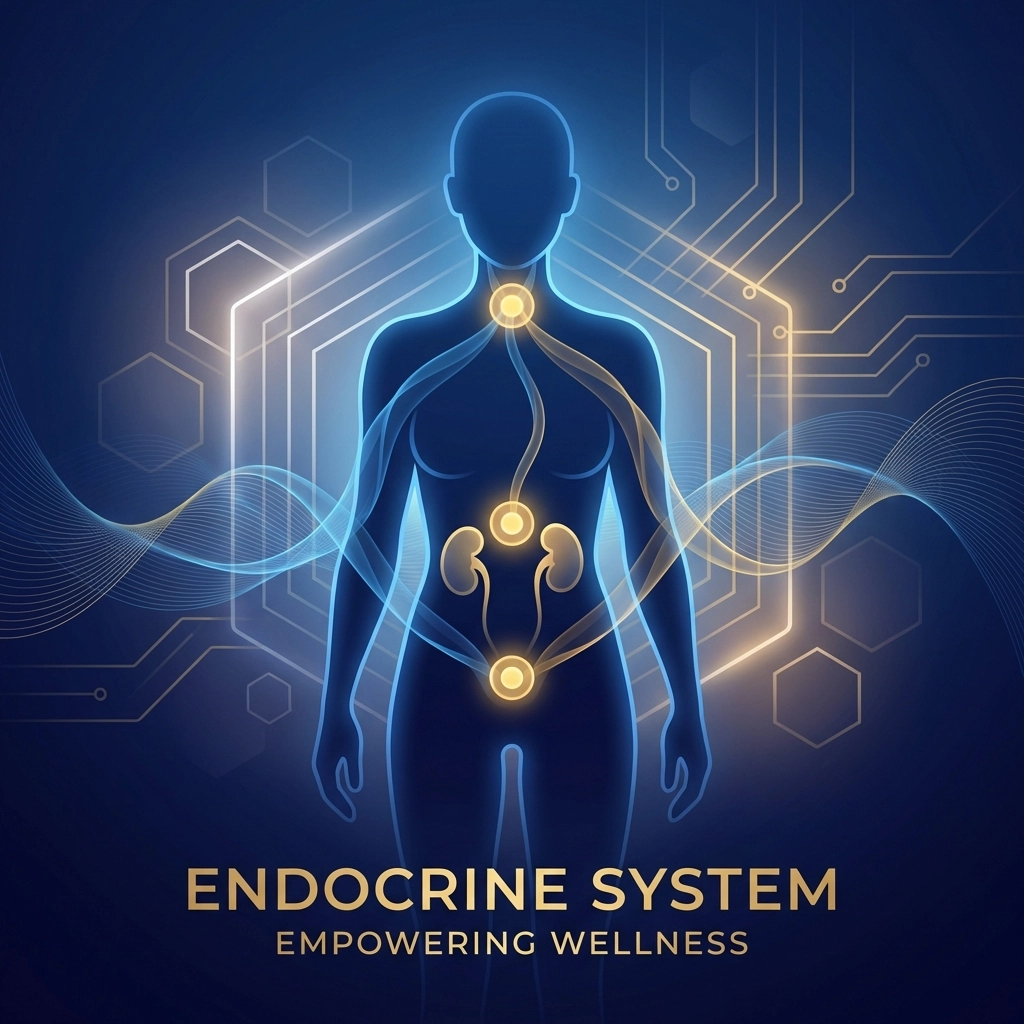
The Bidirectional Relationship
Here's where it gets interesting. The relationship between trace minerals and hormones isn't one-way. It's bidirectional.
Trace minerals influence hormone metabolism, but changes in hormone levels can also affect how your body absorbs, stores, and uses minerals. For example, elevated cortisol (from chronic stress) can deplete zinc and magnesium. Low testosterone can alter how your body processes certain minerals.
This dynamic interaction is why you can't just address one side of the equation. You need to support both your mineral intake and your overall hormonal environment.
That's exactly why the Mineral Vitality: Sea Moss + Shilajit starter bundle was formulated. It combines two of nature's most mineral-dense substances to give your body comprehensive support from the ground up.
The Toxic Mineral Problem
Not all minerals are your friends. Toxic trace minerals like arsenic, cadmium, lead, and mercury act as endocrine disruptors. They interfere with hormone production and can wreak havoc on your reproductive system.
These toxins are everywhere: in tap water, processed foods, pollution, and even some supplements that haven't been properly tested for purity.
The solution? Focus on clean, whole-food-based mineral sources that provide the good stuff without the bad. Sea moss and shilajit have been used for centuries precisely because they deliver bioavailable minerals in their natural form.
Why Sea Moss and Shilajit Work
Let's talk about why these two substances are so effective for hormonal support.
Sea Moss: The Ocean's Mineral Powerhouse
Sea moss contains 92 of the 102 minerals your body needs. That's not a typo. This seaweed pulls minerals directly from ocean water, concentrating them in a form your body can actually absorb.
Key minerals in sea moss include:
- Iodine for thyroid support
- Zinc for reproductive health
- Magnesium for stress regulation
- Selenium for hormone conversion
Sea moss also contains natural mucilage that supports gut health: and your gut is where many hormones are actually produced and regulated.

Shilajit: Ancient Fulvic Acid Complex
Shilajit is a tar-like substance found in the Himalayas, formed over centuries from decomposed plant matter. It's incredibly rich in fulvic acid, which acts as a mineral transporter: helping your cells actually absorb and use the minerals you consume.
Fulvic acid also supports cellular energy production and has been shown in research to boost testosterone levels naturally. It works synergistically with sea moss, enhancing the absorption of all those minerals.
Together, these two substances cover your bases in a way that isolated supplements simply can't match.
Signs You Might Be Mineral Deficient
How do you know if trace mineral deficiency is affecting your hormones? Watch for these signs:
- Fatigue that doesn't improve with sleep
- Brain fog or difficulty concentrating
- Mood swings or increased anxiety
- Low libido or reproductive issues
- Unexplained weight gain or loss
- Hair loss or brittle nails
- Slow recovery from workouts
- Frequent illness or slow healing
If you're experiencing several of these symptoms, your mineral status is worth investigating. Blood tests can help, but they don't always tell the full story since many minerals are stored in tissues rather than circulating in your blood.
Building Your Mineral Foundation
Supporting hormonal harmony starts with giving your body the raw materials it needs. Here's a practical approach:
1. Prioritize whole, mineral-rich foods
Dark leafy greens, wild-caught seafood, grass-fed meat, and organic produce are your foundation.
2. Supplement strategically
The Mineral Vitality: Sea Moss + Shilajit starter bundle provides comprehensive mineral support without the guesswork. It's an easy daily addition that covers gaps in even the healthiest diets.
3. Reduce toxic exposure
Filter your water, choose organic when possible, and avoid heavily processed foods that may contain heavy metals.
4. Manage stress
Chronic stress depletes minerals faster than you can replenish them. Prioritize sleep, movement, and recovery.
The Bottom Line
Your hormones don't operate in isolation. They depend on a foundation of trace minerals that most people simply aren't getting enough of. When you address mineral deficiencies, you're not just supporting one hormone: you're supporting your entire endocrine system.
The research is clear: trace minerals directly influence hormone metabolism, and maintaining adequate levels is essential for everything from energy and mood to reproduction and longevity.
If you're ready to build that foundation, the Mineral Vitality: Sea Moss + Shilajit starter bundle is the simplest way to start. Two powerful, time-tested substances working together to give your body exactly what it needs.
Your hormones will thank you.