
The Truth About Fillers: What's Really in That Garden of Life Bottle?
![[HERO] The Truth About Fillers: What's Really in That Garden of Life Bottle?](https://cdn.marblism.com/J1xG7alhTqT.webp)
You flip the bottle. Squint at the ingredients list. See words like "organic fruit and vegetable blend" and "raw whole food." Feel good about your choice. But here's the question nobody's asking: what happens to those whole foods before they end up in that capsule?
Garden of Life has built a reputation on being the "clean" supplement brand. No synthetic binders. No artificial fillers. Just pure, whole-food nutrition, right? Well, not exactly. And before you think this is another supplement-bashing article, let me be clear: Garden of Life is doing better than most. But "better than synthetic" doesn't mean "optimal for your body."
Let's pull back the curtain.
The Garden of Life Promise (And What It Actually Delivers)
Garden of Life markets their Vitamin Code line as delivering nutrients "in a foundation of raw, organically grown produce." It sounds perfect. The bottles list impressive ingredient panels: over 20 varieties of organic fruits and vegetables, live probiotics, digestive enzymes. The capsules are made from non-GMO vegetable cellulose. Everything is certified organic, gluten-free, and Non-GMO Project Verified.
So what's the problem?
Processing.
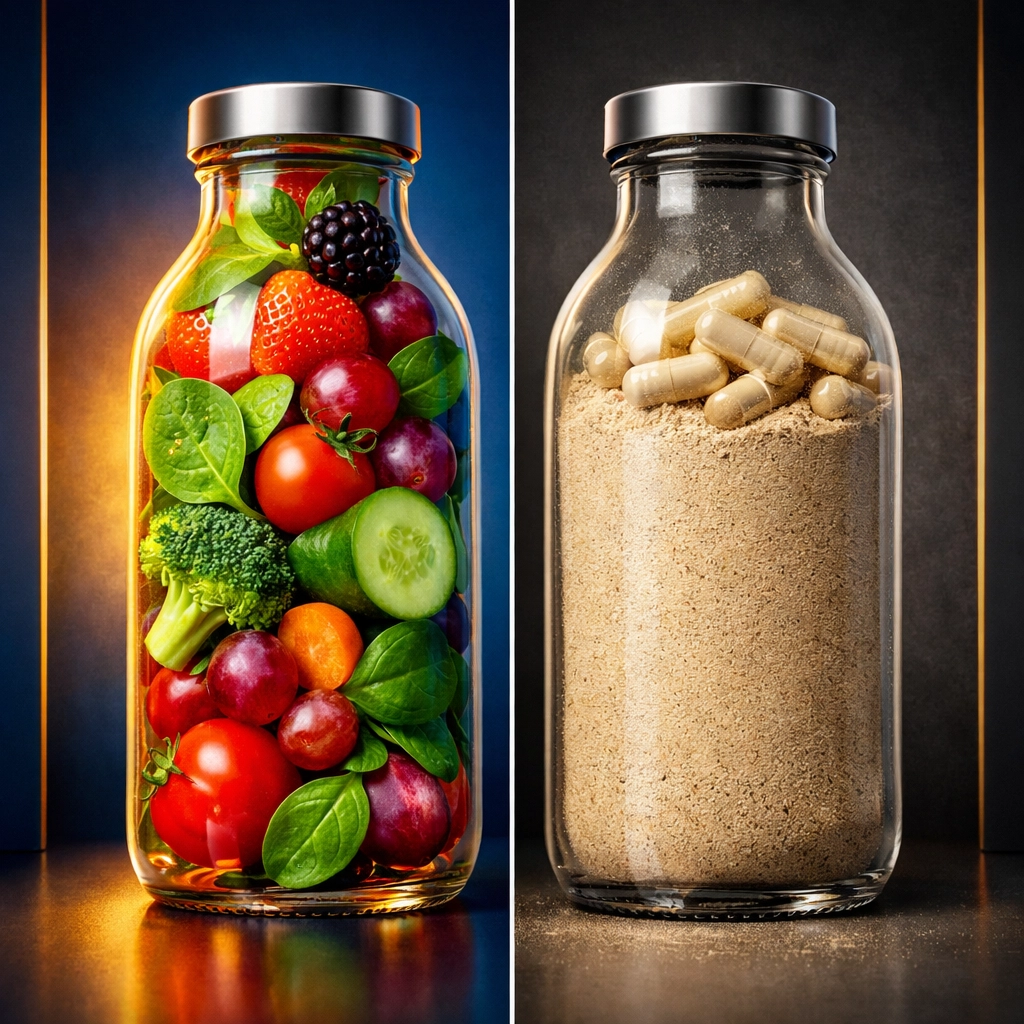
Those organic fruits and vegetables don't magically teleport into capsule form. They're dried. Powdered. Extracted. Concentrated. Encapsulated. Each step removes the food further from its natural state. Yes, you're avoiding synthetic binders and artificial fillers, but you're also consuming nutrients that have been significantly altered from their original matrix.
Think about it: when was the last time an apple existed naturally in powder form inside a cellulose capsule?
The Whole-Food Illusion
Here's where it gets interesting. Garden of Life uses the term "whole food" liberally, and technically, they're not wrong. The ingredients originated from whole foods. But by the time those organic strawberries and kale make their way into your vitamin bottle, they've undergone significant transformation.
The company emphasizes their products are "raw," produced without high heat. That's commendable. Heat can destroy certain nutrients and enzymes. But "raw" doesn't mean "unprocessed." It just means one specific type of processing (heat) was avoided while other forms of processing (drying, grinding, extracting, tableting) were still employed.
Compare this to something like Mineral Vitality: Sea Moss + Shilajit. You're consuming Sea Moss in gel form, essentially the plant itself, soaked and blended. And Shilajit in its resin form, the actual substance that oozes from rocks in the Himalayas, minimally processed to remove impurities. No drying into powders. No grinding into tablets. No capsules required.
It's the difference between eating an orange and taking orange powder in a capsule. Both technically come from oranges, but your body recognizes one as food and the other as... something else.
What About Those "Live Probiotics and Enzymes"?
Garden of Life proudly includes live probiotics and digestive enzymes in many formulations. On the surface, this seems like a smart addition. After all, if you're consuming nutrients in a form your body might struggle to recognize, why not include helpers to break them down?
But here's the uncomfortable question: if the nutrients were in their natural, bioavailable form, would you need added enzymes to digest them?
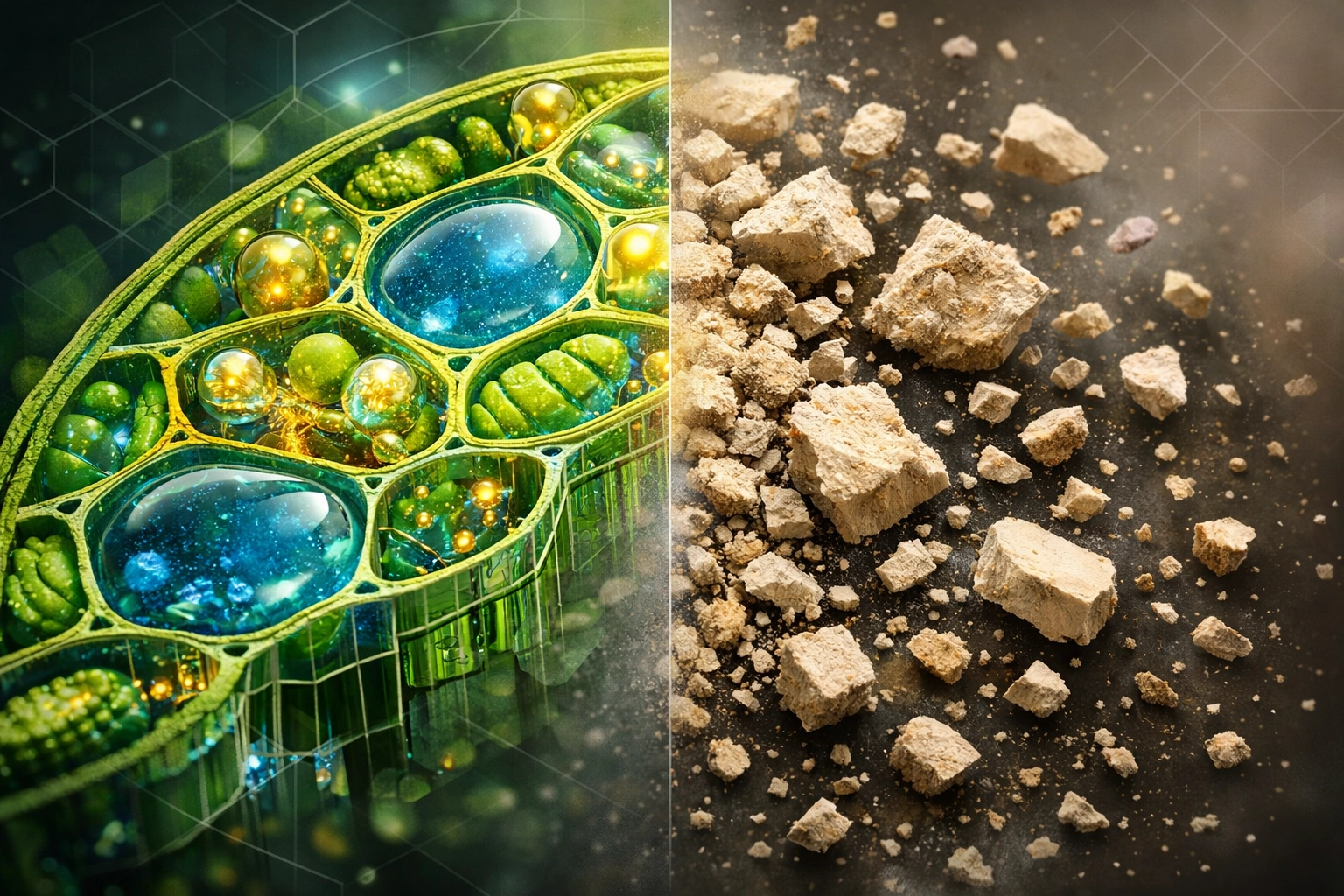
When you consume minerals from Sea Moss, containing 92 of the 102 minerals your body needs, they come packaged in their natural plant matrix. Your body has been recognizing and absorbing nutrients from plants for millennia. It knows what to do. The minerals arrive with their natural cofactors intact. No assembly required.
The Mineral Vitality starter bundle doesn't need added probiotics or enzymes because it's delivering minerals in a form your biology already understands. Sea Moss isn't mimicking food, it is food. Shilajit isn't a supplement trying to replicate minerals, it's an ancient mineral compound delivering fulvic acid and trace elements in their naturally occurring state.
The Capsule Compromise
Let's talk about delivery systems. Garden of Life uses vegetable cellulose capsules, which is certainly preferable to gelatin or synthetic materials. But capsules, by their very nature, require the contents to be in powder form. And getting whole foods into powder form requires... you guessed it... processing.
The capsule also creates a barrier between the nutrient and your digestive system. Your body must first break down the capsule, then attempt to absorb the powdered contents. It's an extra step that doesn't exist when you consume nutrients in their natural state.
Sea Moss gel, on the other hand, can be added directly to smoothies, teas, or even taken by the spoonful. It hits your digestive system in a form that's immediately recognizable and absorbable. No barrier to break through. No powder to reconstitute. Just plant-based minerals in their natural matrix, ready for absorption.
Shilajit resin dissolves directly in water or tea. The fulvic acid and minerals are released in liquid form, allowing for rapid absorption. No grinding required. No capsule needed.
The "Non-Filler" Filler
Here's something most people miss: when supplement companies proudly announce "no fillers," they're typically referring to inactive ingredients like magnesium stearate, silicon dioxide, or maltodextrin, substances added purely to aid manufacturing with no nutritional value.
Garden of Life avoids these traditional fillers. Good for them. But they still use their "proprietary organic fruit and vegetable blend" as the base of every formula. Now, fruits and vegetables sound healthy, but ask yourself: if you're taking a vitamin specifically for, say, vitamin D, do you need the organic blend of 23 fruits and vegetables as the base?

That blend isn't there primarily for your health, it's there to create enough material to fill the capsule and to support their "whole food" marketing message. It's not a synthetic filler, but it's still filler in the sense that it's taking up space and adding to your body's digestive workload.
The Mineral Vitality: Sea Moss + Shilajit bundle takes a different approach entirely: pure Sea Moss, pure Shilajit, no base blends, no capsule-filling agents, no "proprietary formulas" that obscure the actual ingredient amounts. You know exactly what you're getting, and your body doesn't have to sort through supporting ingredients to access the minerals.
The Bioavailability Question
Garden of Life emphasizes that their nutrients come with "natural cofactors" that occur when nutrients are grown in food matrices rather than synthesized. This is absolutely true and represents a genuine advantage over synthetic vitamins.
But here's the thing: even whole-food-based nutrients in capsule form can't match the bioavailability of minerals that haven't been processed into powders. The act of dehydrating and grinding plants disrupts their natural structure. Yes, some cofactors remain, but others are lost or altered in the process.
Sea Moss, consumed in its gel form, retains the complete spectrum of minerals, vitamins, and phytonutrients in their original relationships. Nothing has been isolated, extracted, or concentrated. The entire plant matrix is intact. When you consume Sea Moss, your body receives the minerals alongside all the complementary compounds that nature included to facilitate absorption.
Shilajit, formed over centuries from the decomposition of plant material, contains minerals chelated with fulvic acid: nature's own delivery system for optimal absorption. You're not trying to mimic what nature does in a laboratory. You're consuming what nature already perfected.
So What's Really in That Garden of Life Bottle?
To be fair: organic plant powders, vegetable cellulose, probiotics, enzymes, and nutrients derived from food sources. Nothing overtly harmful. Nothing synthetic. For someone transitioning away from conventional multivitamins like Nature Made or Centrum, Garden of Life represents a significant upgrade.
But for someone who understands that the goal isn't just to avoid synthetic fillers but to provide your body with nutrients in their most recognizable, absorbable form, Garden of Life still falls short.
The bottle contains processed whole foods masquerading as whole foods. It's the supplement industry's version of "natural flavoring": technically accurate, but missing the full picture.
The Mineral-First Alternative
What if instead of trying to cram dozens of isolated nutrients into capsule form, you focused on providing your body with a complete mineral foundation in the form nature intended?
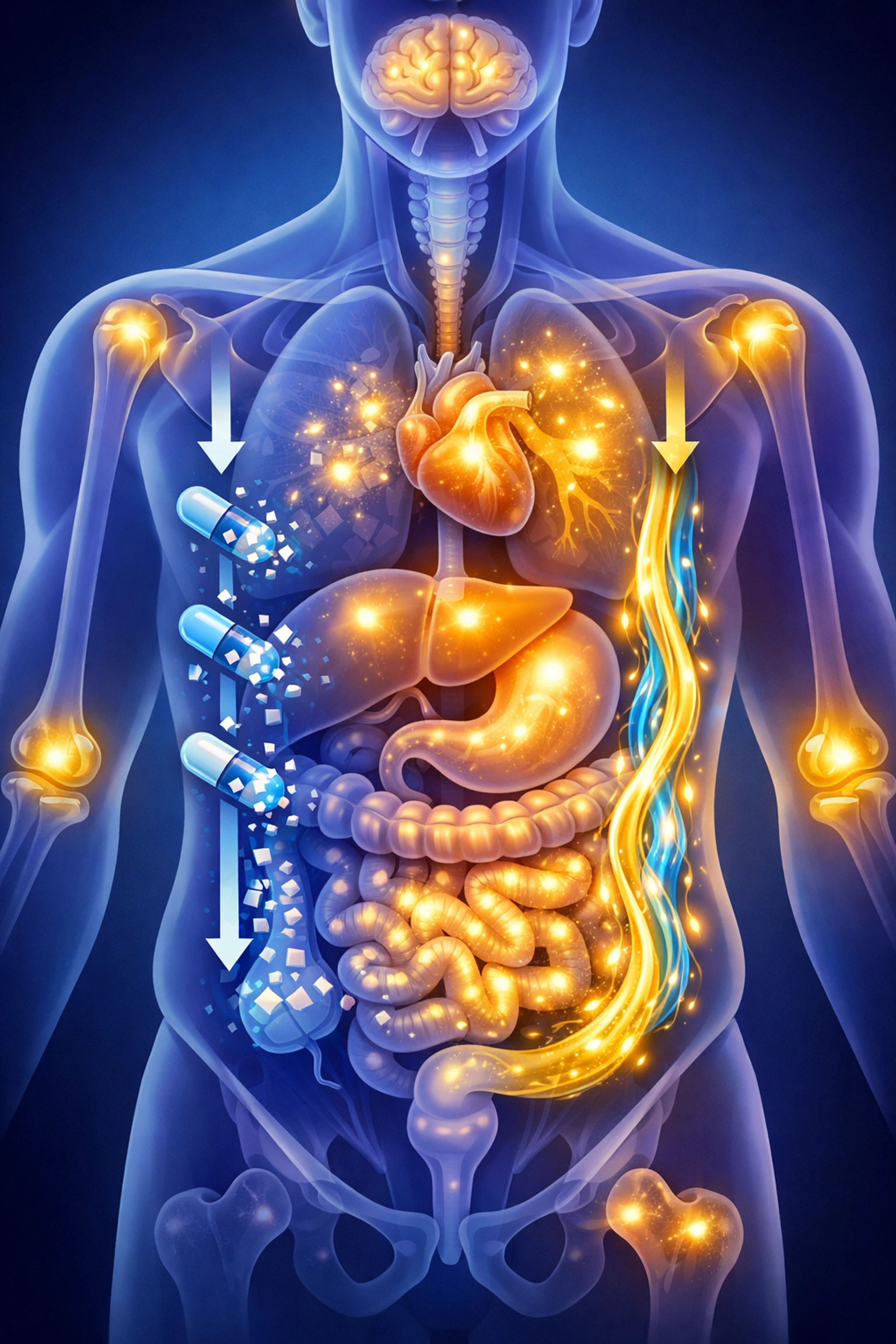
That's the philosophy behind the mineral-first approach. Sea Moss delivers 92 minerals in their natural plant matrix. Shilajit provides fulvic acid and trace elements in their naturally occurring, highly bioavailable form. Together, they create a foundational nutrient base that your body recognizes, absorbs, and utilizes efficiently.
No capsules. No powders. No fillers: not even the "clean" kind. Just pure, whole-food minerals supporting your body's countless biological processes.
This isn't about vilifying brands like Garden of Life, Nature's Way, or Solgar. It's about recognizing that even the best capsulated supplements are still one step removed from what your body is designed to process. And when an alternative exists that eliminates that step entirely, why settle for close enough?
The Bottom Line
Garden of Life isn't deceiving you. They're delivering exactly what they promise: nutrients from organic whole foods without synthetic binders or fillers. But the question isn't whether they're being honest: it's whether their approach is optimal.
When you choose mineral-dense whole foods like Sea Moss and Shilajit over even the cleanest capsulated supplements, you're choosing to work with your biology instead of around it. You're choosing absorption over marketing claims. You're choosing what nature provides over what laboratories process.
Your body doesn't need nutrients in powder form inside a capsule. It needs minerals in their natural state, delivered in a matrix it recognizes, surrounded by complementary compounds that facilitate absorption.
That's not a supplement. That's foundational nutrition.
Your Issues. My Priority.
: Kevin D. Williams, CEO
First Principles Health, a Division of Stephen Capital Partners, LLC